Crypto Markets
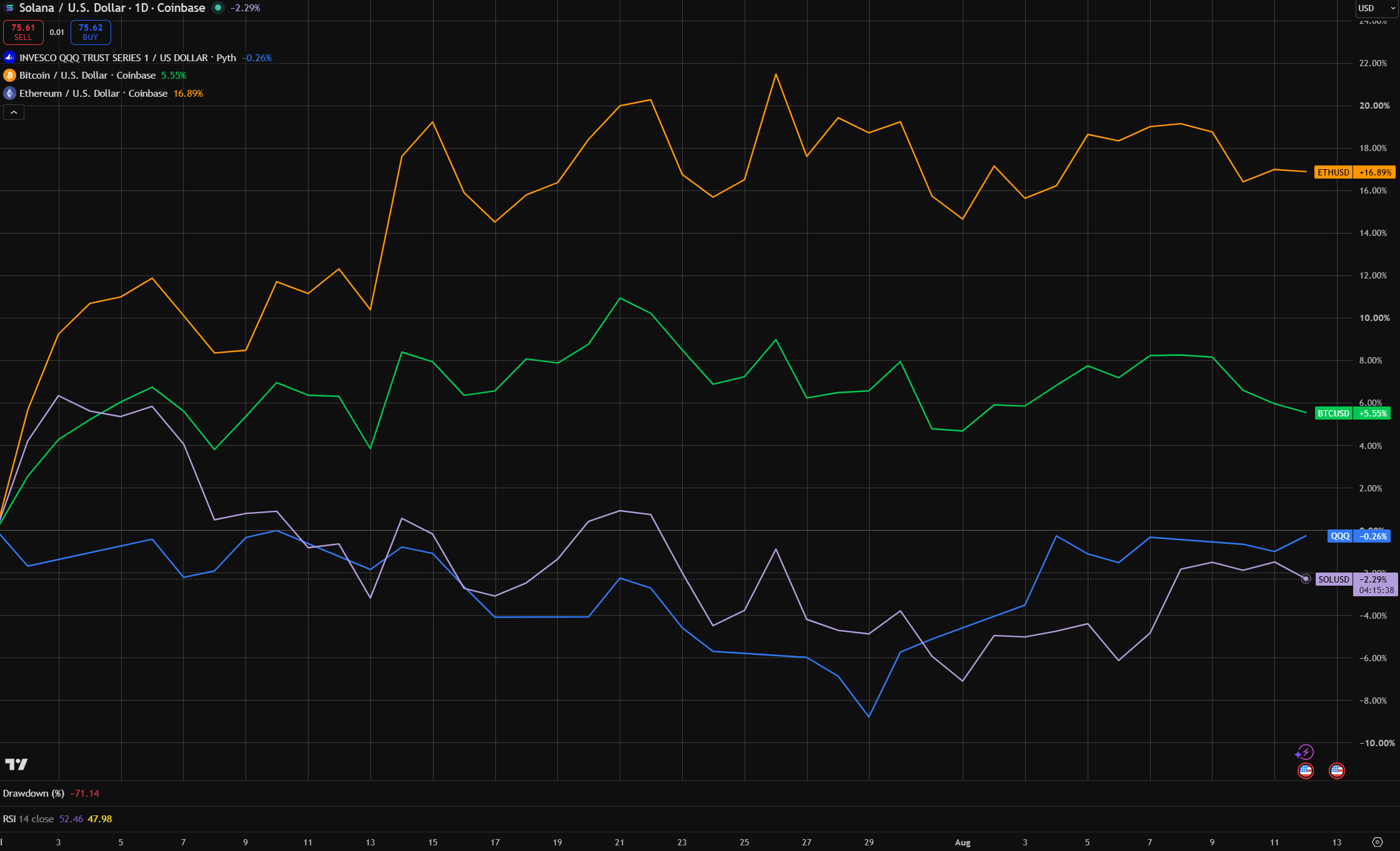
BTC ended July making a higher low and ended the month up 7% at around $62k, marking a strong move off the local low of $57K reached during Strategy’s STRC turmoil. Since June 30th, BTC and ETH exhibited relative strength versus the Nasdaq, outperforming by 5.8% and 16.9% respectively, while SOL slightly underperformed. July’s price action reinforced our view that crypto’s bottoming process is well underway.
Despite a brief 10% Nasdaq drawdown, sharp deleveraging across growth and AI-related equities, and accelerating BTC sales from Strategy, Bitcoin absorbed the negative news, netted $280M in ETF flows, and finished the month higher. This emerging decoupling and resilience suggests crypto is beginning to trade on improving asset-specific fundamentals and that sellers are becoming exhausted, leaving the market increasingly responsive to incremental demand.
The broader backdrop is also turning supportive. Traditional risk assets remain fundamentally strong, stock market strength is broadening, inflation risks are receding, and onchain activity is beginning to recover across equity perps, memecoins, RWAs, and Solana applications. None of these signals proves that the bottom is definitively in, but together they are consistent with a bottoming process, and support our expectation that crypto activity and risk appetite will broaden over the next two quarters.
Macro Strength is Broadening
Tradfi markets and global macro remain extraordinarily healthy. The ISM PMI - a reliable proxy for the cyclical economy - is accelerating higher while CPI and PPI are likely entering a disinflationary cycle (more on this below), the combination of which implies profit margin expansion and continued earnings growth.
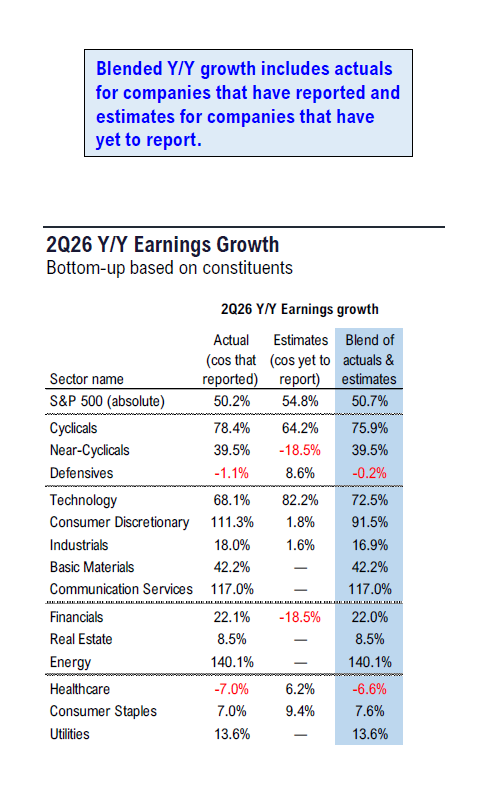
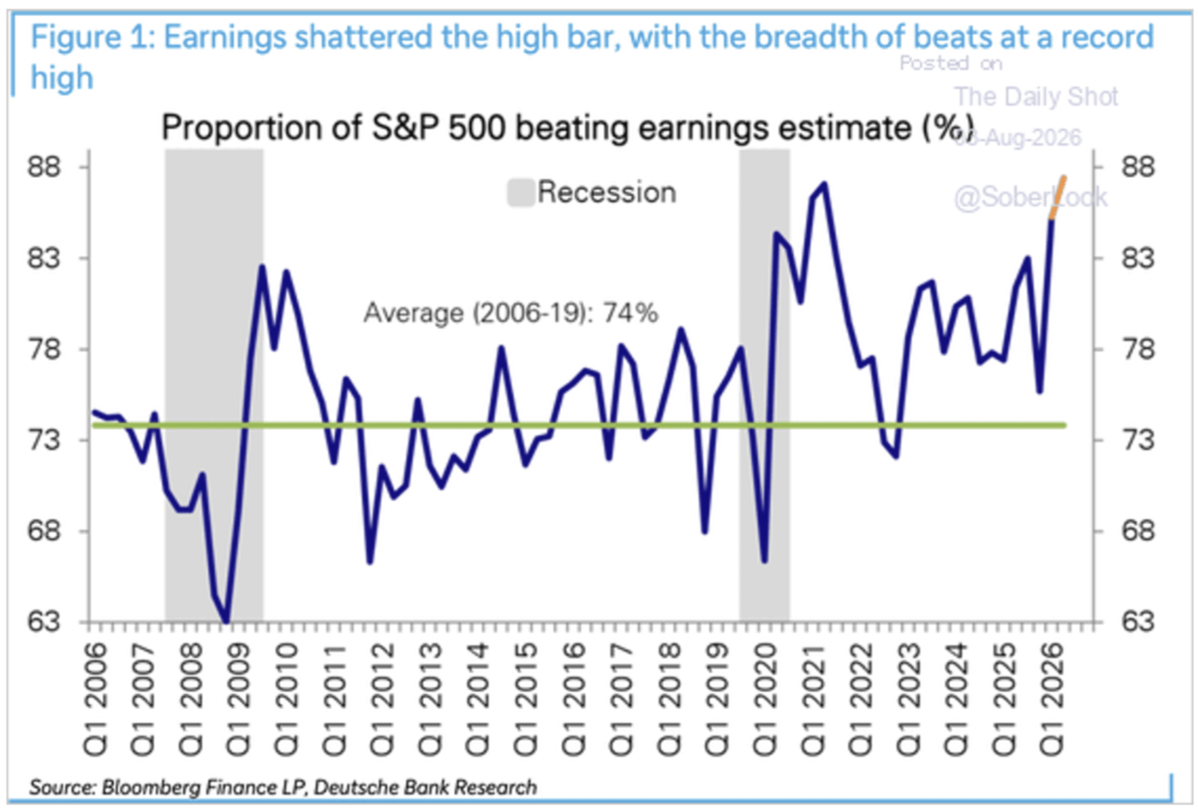
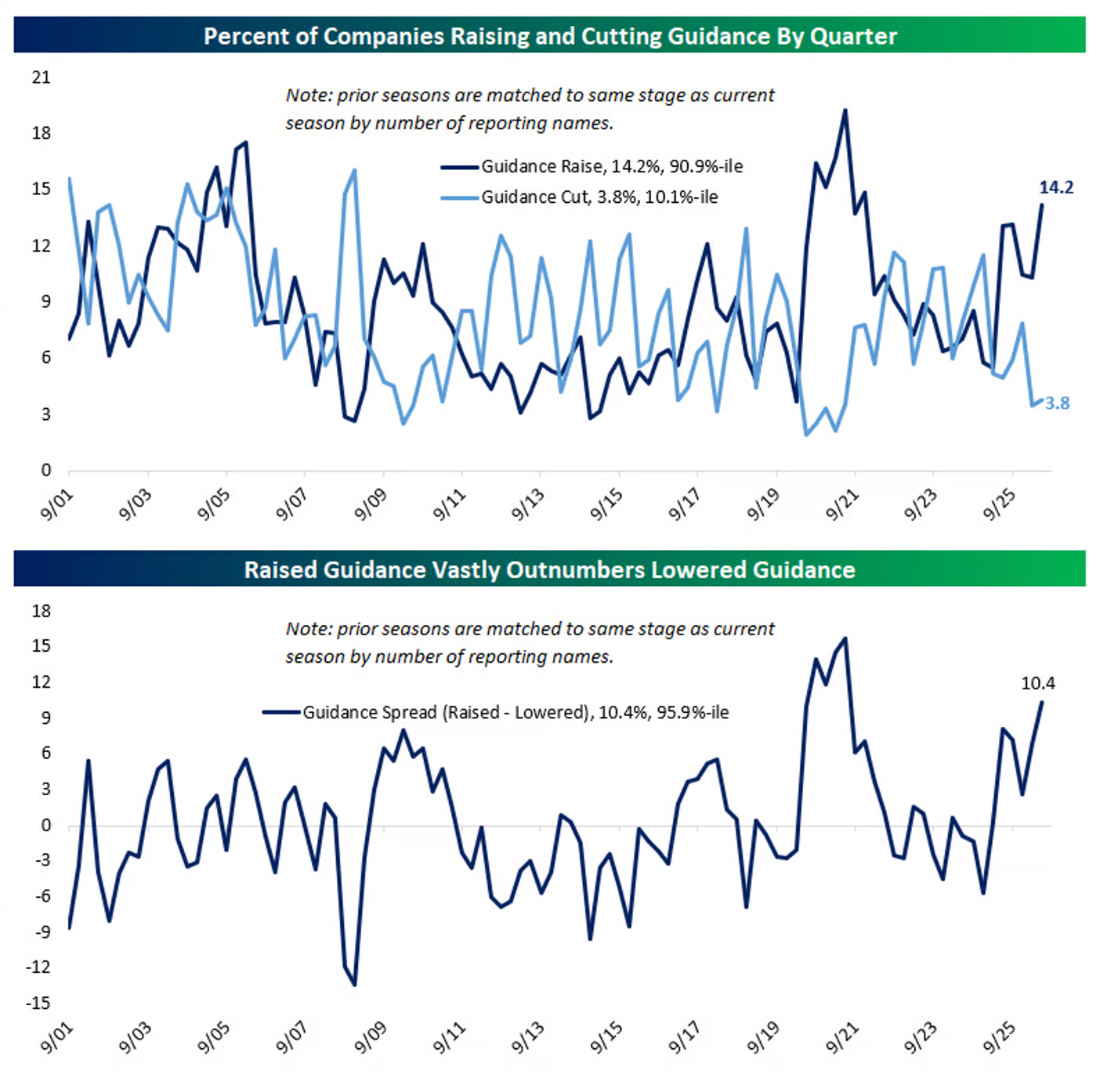
And the strength is broadening. Q2 was another historically strong quarter for public equities. With 91% of companies having reported since this writing, 87% of companies are beating EPS estimates, with aggregate YoY earnings growth of over 50%(!). Guidance has also been exceptionally strong by historical standards, with over 14% of company raising guidance, and the spread of companies raising versus cutting guidance registering its 4th highest reading in the past 25 years.
Inflation Data Leans Disinflationary; Market Pricing Agrees
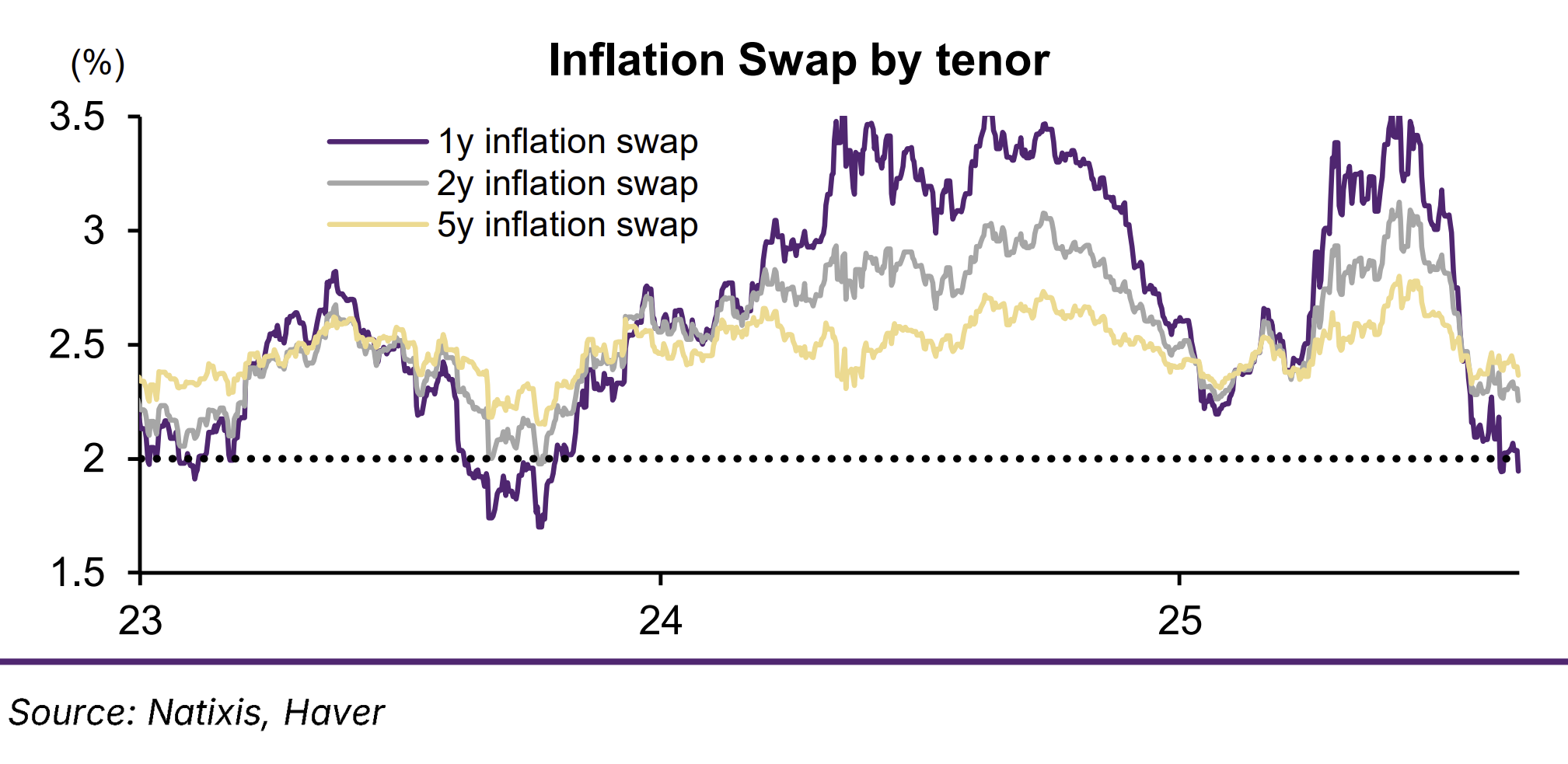
Coming into August, the inflation story was perfectly mixed. Traditional, time-tested measures like CPI and PCE told us the inflation scare was behind us, real-time events like the US-Iran conflict and real-time gauges like Truflation pointed to renewed upside risk, and forward looking market indicators like breakevens points to near-term disinflation. Given the latest inflation print and NFP data, we believe the mix of data leans disinflationary, while US-Iran tension and a hot US growth backdrop remain risks to this thesis.
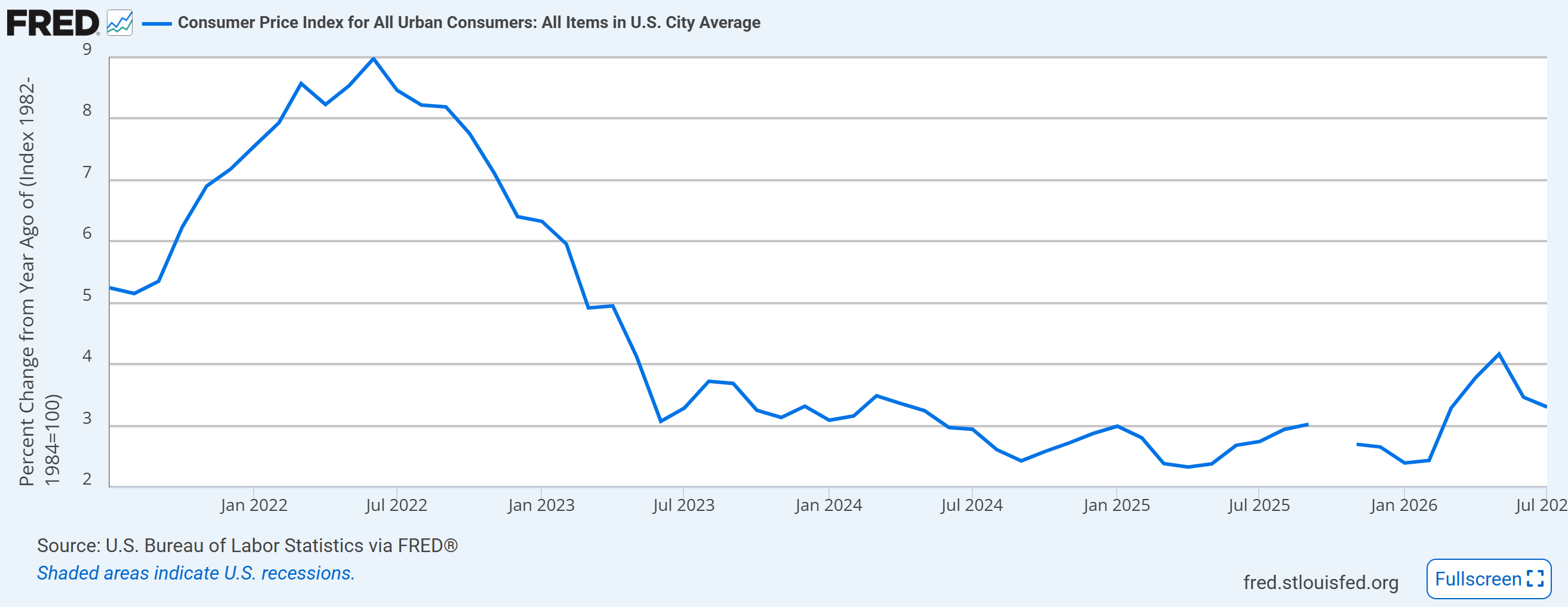
We stress that our view is born out by market pricing. While nominal treasury yields are objectively rising, a sign that perhaps inflation expectations are rising, inflation swap rates across that curve are trending lower, with the 1-year tenor sitting at a low consistent with 2023 levels. This, in conjunction with the fact that CPI continues to slowly normalize towards 2%, consistent with long-term averages, lead us to believe that the worst of inflation is behind us.
Market Shrugs off CLARITY Delay
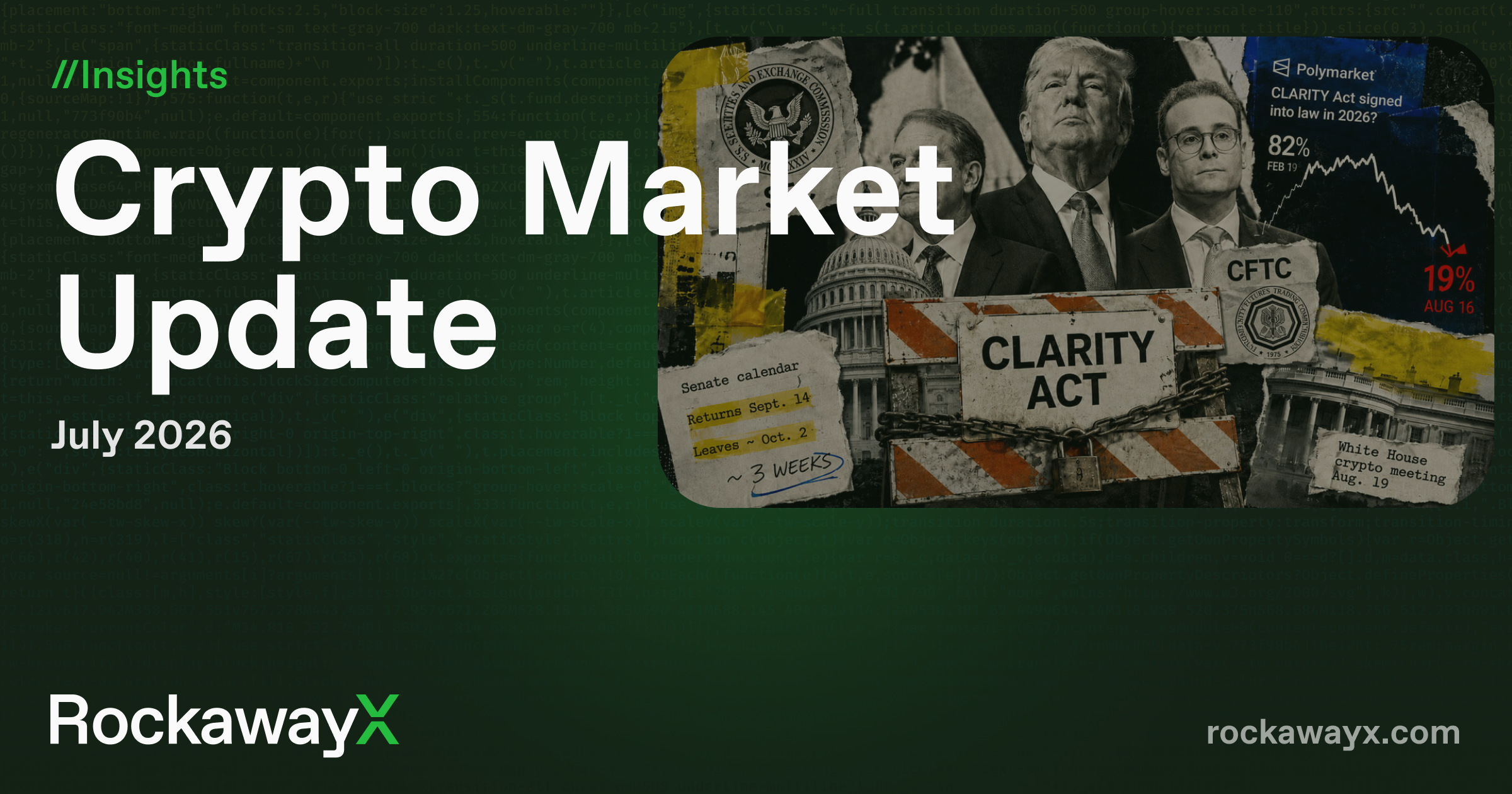
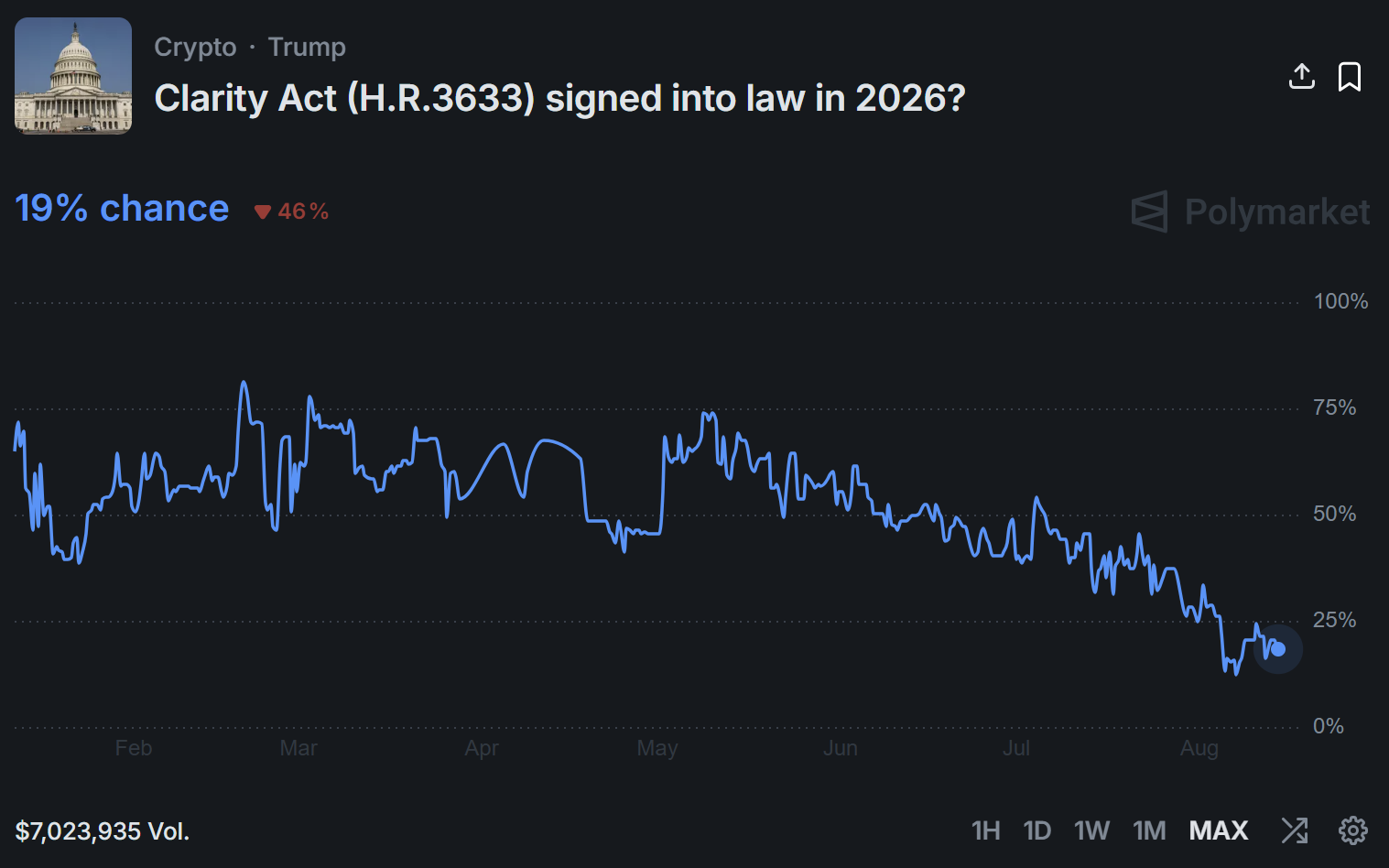
The CLARITY Act did not pass before the August recess, as the US Senate left Washington on August 8 with no floor vote for the bill.
The bill is not dead, however, and the market’s reaction, in our view, is the important story.
Majority leader Thune filed cloture on the motion to proceed before the August recess, keeping the bill on the docket with a scheduled procedural vote for September 15. This is not a final vote on the bill, but it positions the Senate to begin floor debate if cloture gets 60 votes. This window is objectively narrow. The Senate has roughly three working weeks in September before midterm campaigns will consume the Senate’s efforts, and the bill needs 7 Democrats to support it to reach the 60 votes needed to force a floor debate. If the September vote fails, a 2026 passage is effectively off the table.
Importantly, crypto market have barely reacted to the declining probability of CLARITY in 2026. We think there are two reasons for this.
First, as we’ve laid out above and in past monthly notes, crypto is currently in a bottoming process. Sellers are nearly fully exhausted, with only net buyers remaining. Next, the current SEC has promised crypto-friendly rulemaking, such as a tokenization example for stocks and guidance on 24/7, as bridge to the passage of the CLARITY Act. We expect these new rules to be announced in the coming weeks. Regulatory progress will continue despite CLARITY.
Onchain Resurgence?
Bucking the uncertainty from Washington, we’re seeing a reemergence of onchain activity in two key verticals - onchain equities and memecoin trading.
Equity Perps Trading Reaches New Milestones
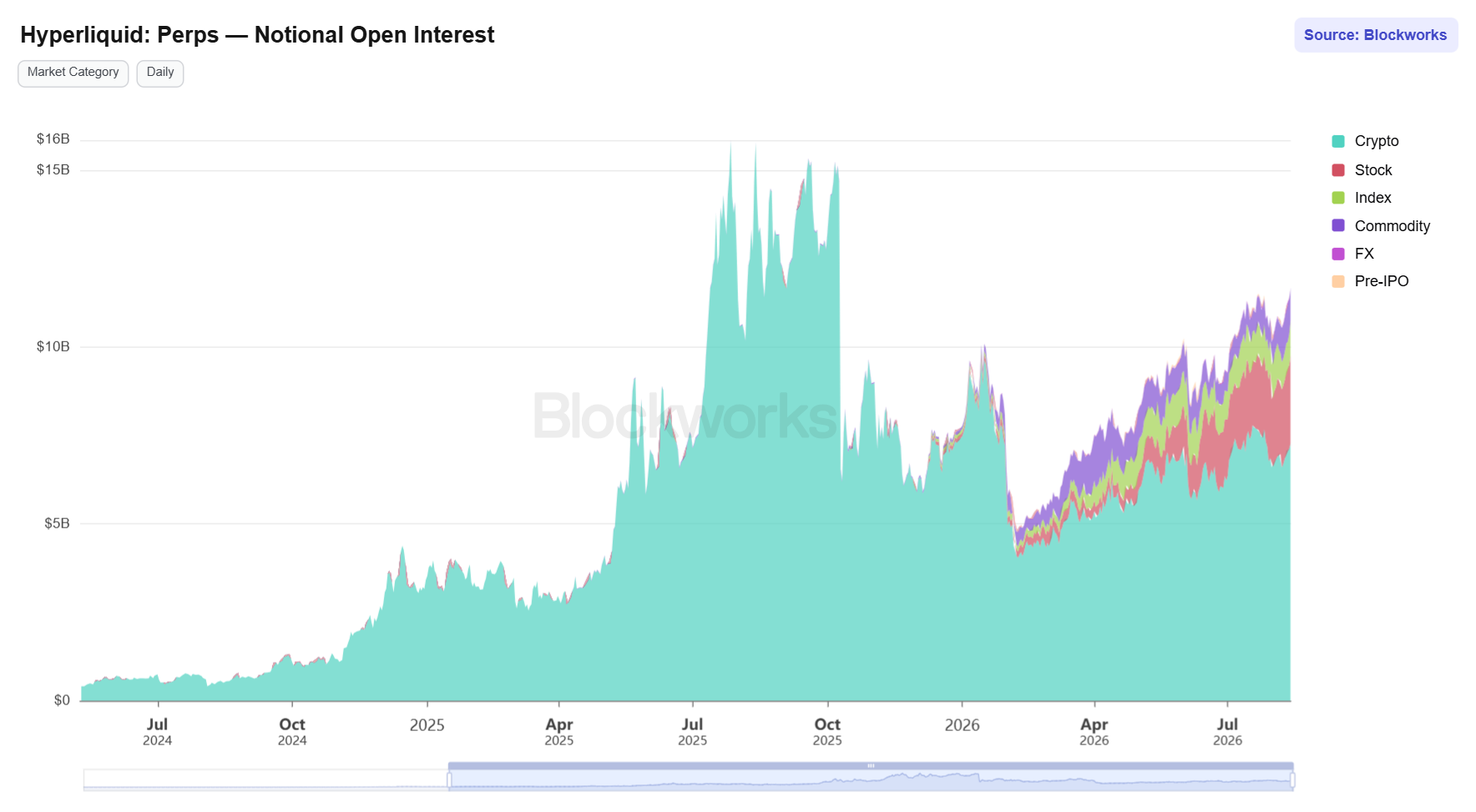
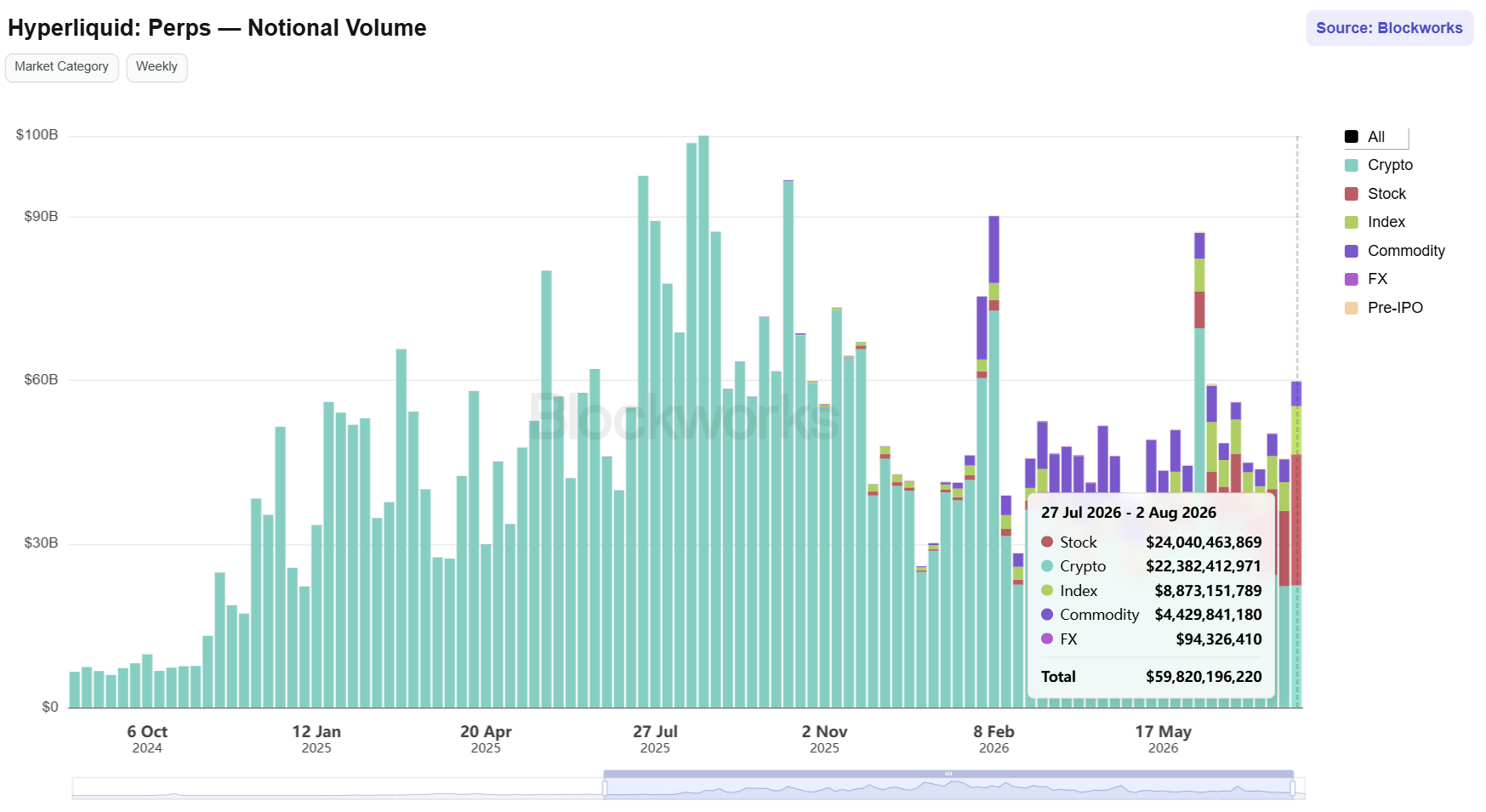
Hyperliquid total open interest reached its highest level the 10/10 crash, led by a surge in equity perps exposure - which both de-risks Hyperliquid’s revenue base and expands its total addressable market. We also saw total equity perp volume surpass crypto perp volume in the last week of July, a new milestone for onchain equity trading. We expect this trend to intensify over time - equity perp volume may handily surpass crypto perp volume onchain over the next twelve months, greatly expanding the total revenue opportunity for the crypto industry.
Memecoin Platforms Top Revenue Leaderboards
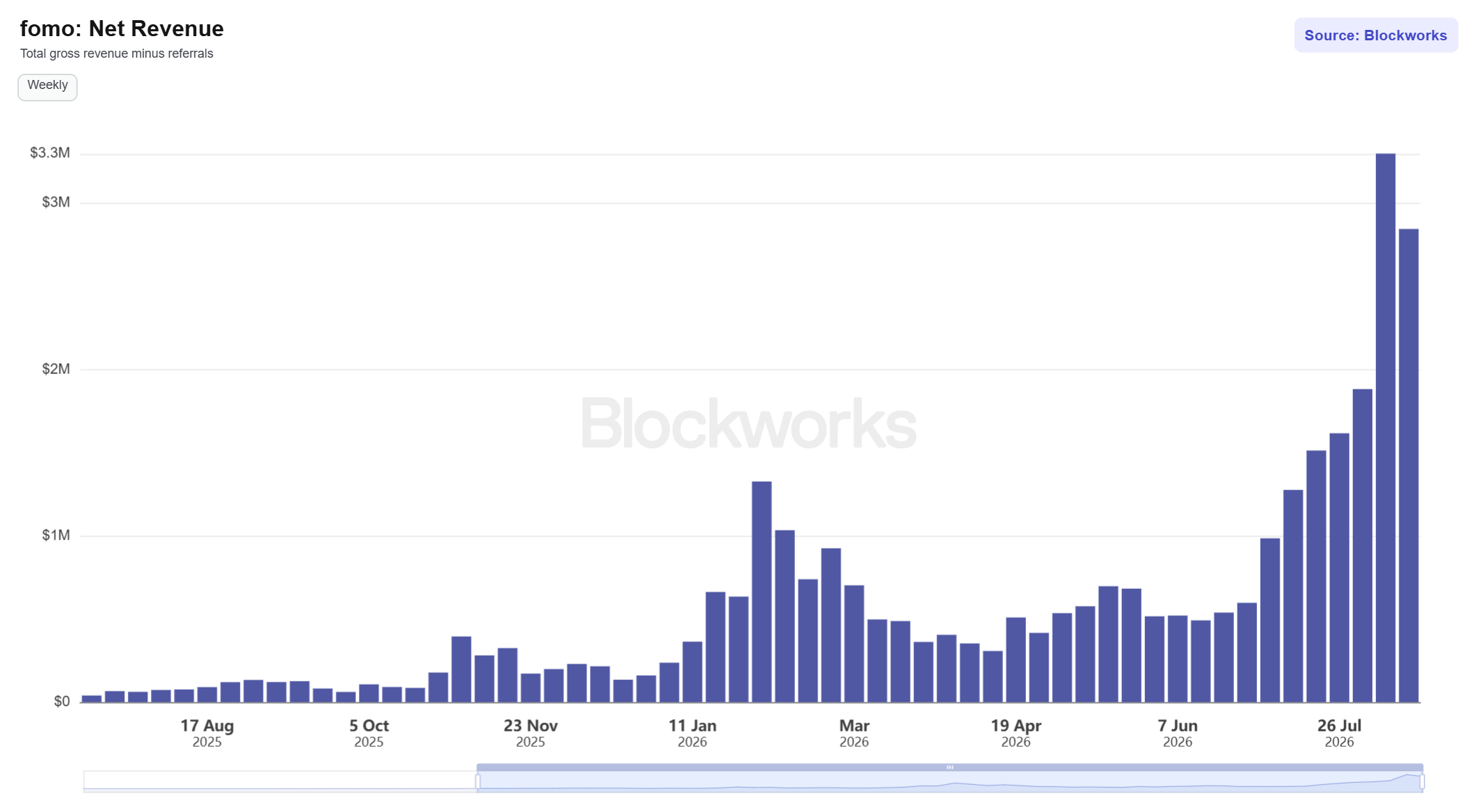
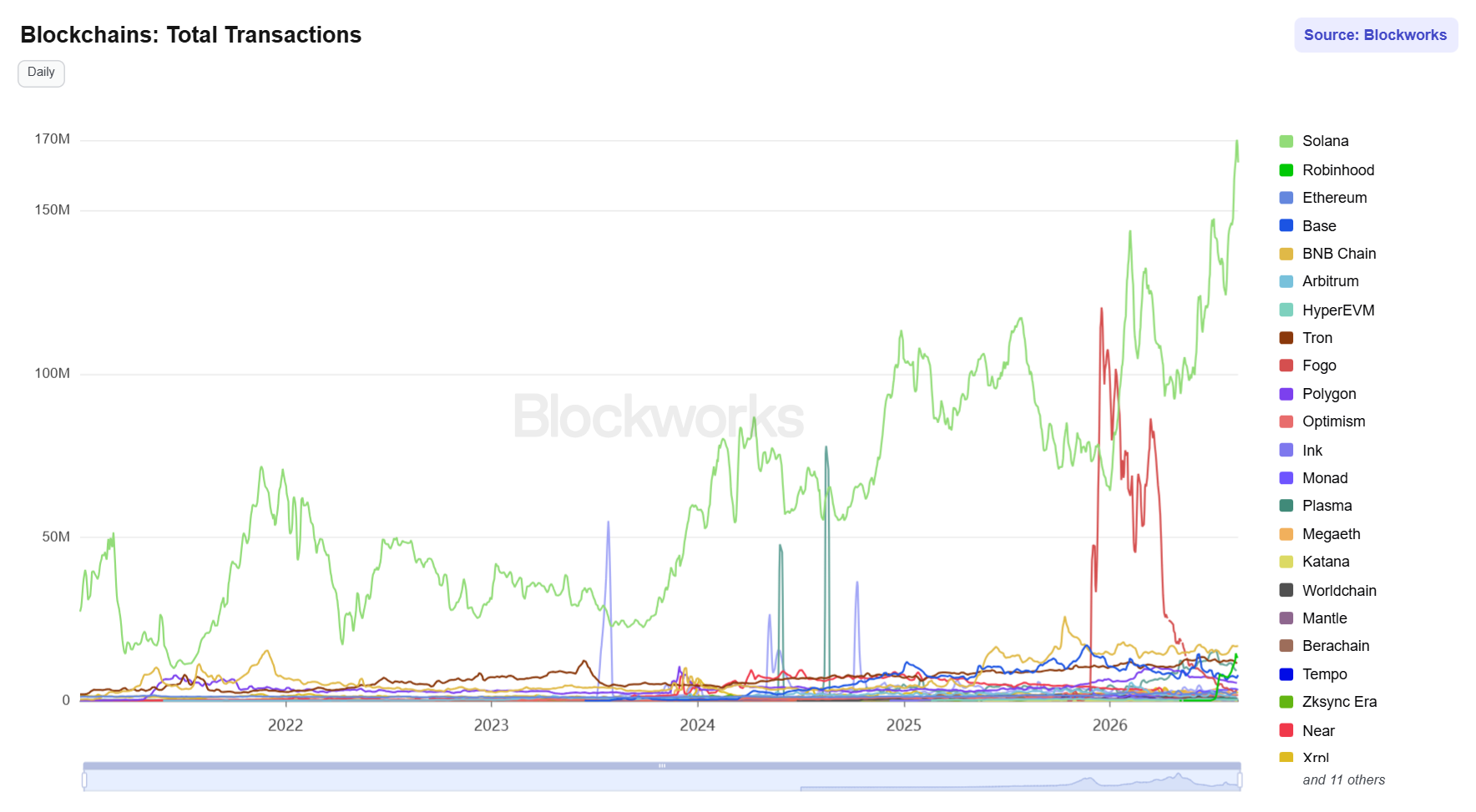
Memecoin platform Pump.fun and breakout social trading app fomo saw a surge in memecoin trading activity in the past weeks despite July and August being seasonally weak periods. Much of the activity took place on Solana and Robinhood chain, both known for their large installed bases of high turnover retail traders. As a result, Pump.fun fomo were propelled to the top of the revenue leaderboards and Robinhood chain became the highest earning L2. fomo success reached mainstream audiences - the app reached as high as number 5 in the Apple App Store finance category.
Solana SIMDs Are Catalysts In The Next Bull
Solana’s technical roadmap is reaching impressive new milestones. We think these changes and future upgrade roadmap present near-term catalysts for the Solana ecosystem and SOL token.
SIMD-0286 - Bigger blocks, more revenue. On July 29, Solana block limits rose to 100M compute units (”CUs”) from 60M CUs, effectively a 66% increase in blockspace. The upgrade fixes a technical shortcoming that held back Solana revenue. Approximately 1 in 9 block reaches full capacity on Solana. When block are at full capacity, high value transactions may never make it to the chain, and disappointed traders who don’t get their fills experience bad UX, leading to potential churn. By raising the effectively block limit, the network enables more transactions, higher transaction complexity, and more reliable blockspace when traders need it the most. Solana’s technical leadership in throughput continues to go unmatched.
SIMD-0550 & SIMD-0553: Inflation reduction & a programmatic burn. In August, SOL validators and stakers opened governance on two tokenomics proposals that address a long standing critique of the network.
0550 would double SOL’s disinflation rate from 15% to 30% per year, cutting the path to the 1.5% terminal inflation rate roughly in half (about 5.7 years to about 2.8 years). Helius projects about 18.9 million fewer SOL emitted over six years, or about $1.5B at the price used in that model.
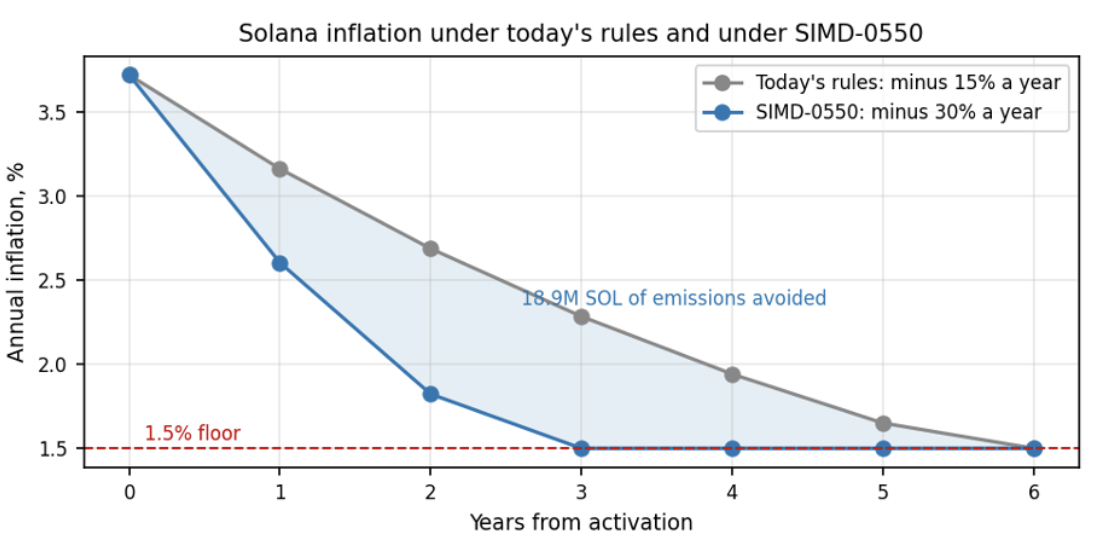
0553 introduces a resource-based SOL burn mechanism. The new resource fee is 100% burned and scales with requested scheduler cost, not with compute consumed after execution. That permanently removes SOL already paid as fees. It is not a network buyback. A scenario analysis suggests the burn could amount of 4-37% of the next twelve month of SOL issuance, and would scale up over time, assuming 0550 passes too.
As of 18 August both proposals are still in discussion on the official governance dashboard. Support is concentrated among large operators, led by Helius, and the formal three epoch vote has not started. We expect some version of both to pass, with implementation inside 12 months if they do.
Faster disinflation reduces new SOL supply. A resource driven burn would further tighten supply as activity grows. Greater blockspace is a separate, already live change (SIMD-0286 raised the block limit from 60M to 100M CUs on 29 July).
OnRe: DeFi’s Burgeoning Yield Market
Growth Inflection
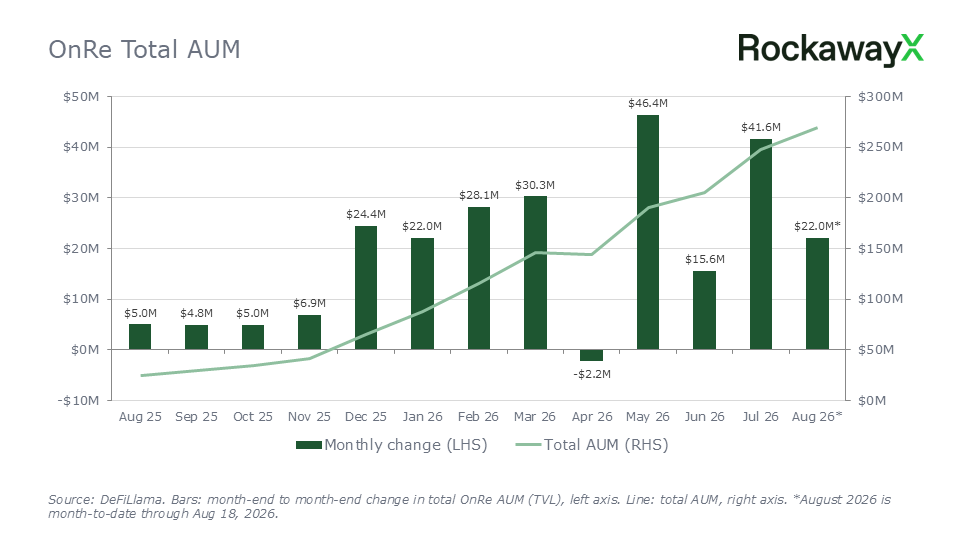
RockawayX portfolio company OnRe remains a standout in the RWA space, with a growth rate that is actually accelerating over time.
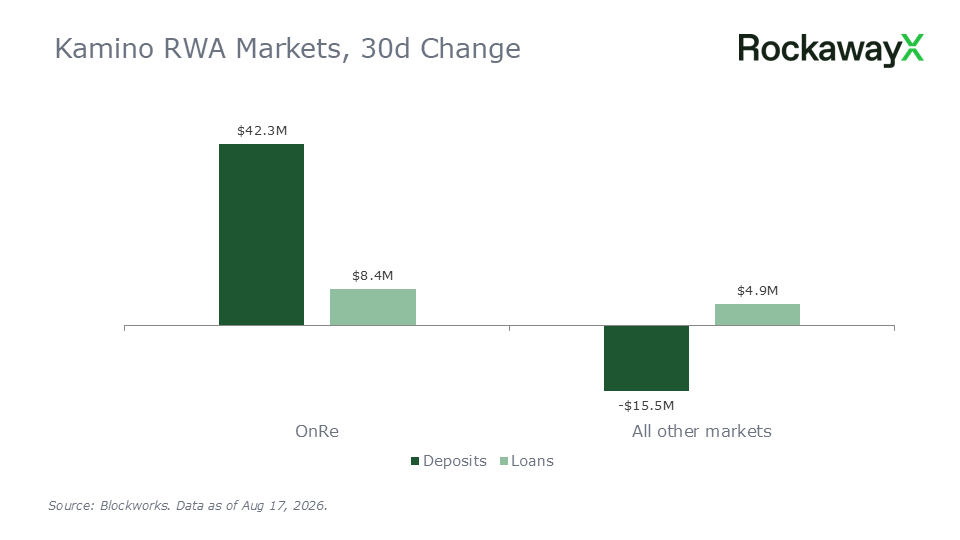
OnRe’s ONYC reinsurance fund was the 5th fastest growing credit RWA according to RWA.xyz, and the fastest growing RWA market on Kamino over the trailing 30 days. The share gain was stark - most Kamino RWA markets saw outflows, while OnRe added $42M, and lifiting its share of total Kamino RWA deposits to ~32% from ~25% over the period. OnRe is now approaching $270M in AUM while maintaining double digit yields, a critical point of differentiation compared to most defi assets and RWAs, whose yields compress as AUM grows.
Tranching: Expanding ONyc’s Addressable Market.
OnRe and Exponent (another RockawayX portco) are teaming up to offer tranched exposure to OnRe’s ONyc token. We believe this will materially expand ONyc’s addressable market.
Tranching splits single exposures into slices with distinct risk/return profiles. The junior tranche absorbs first losses and volatility in exchange for a levered share of the underlying’s yield. The senior tranche sits the protective cushion provided by the junior tranche holders and earns a lower, but more stable and loss-remote return. This structure has been battled test over decades in traditional credit markets, and has resulted in an end market for tranched products that is far larger than the original market for the underlying. Different investors have different risk mandates, and a single blended exposure serves may be out of scope of certain mandates. Tranching enables asset issuers to craft exposures that fit the risk parameters of many mandates, expanding the addressable market for an asset class.
Applied to ONyc, the higher yield trache at 26% today opens to asset to high return / high risk defi participants - perhaps the same participants that trade levered perps, or the sUSDe PT loopers of last cycle. The senior tranche, yielding 7.6%, makes reinsurance exposure accessible to more conservative vault managers, who are either warming up to the asset class or want senior protection from reinsurance claims.
The srONYC and jrONYC tokens are the latest addition to an expanding suite of products built on top of ONyc. The OnRe team has been deliberate about cultivating differentiated exposures to the asset, an approaching that has raised reinsurance’s profile in crypto and driven adoption across defi users.
Closing Thoughts
July strengthened our conviction that crypto’s bottoming process is underway. Bitcoin absorbed a sharp Nasdaq drawdown, continued selling from Strategy, and declining odds of near-term CLARITY passage, and still finished the month higher.
The conditions for a broader recovery are increasingly falling into place: traditional markets remain strong, the AI-tradfi investment cycle is intact, inflation pressures are easing, and regulatory progress still continues. Most importantly, onchain activity is beginning to reaccelerate across equity perps, memecoins, Solana, and RWAs. With sellers increasingly exhausted and fundamental catalysts mounting, we expect crypto activity and risk appetite to broaden over the coming quarters.